


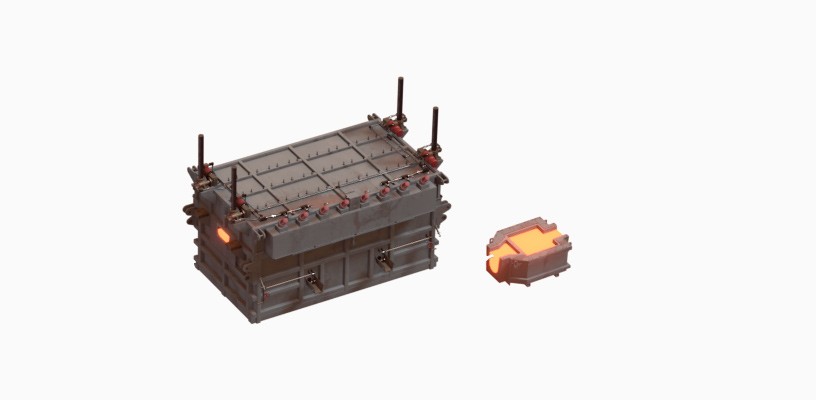
Degassing consumables
In aluminium melt treatment, degassing rotors are used inside in-line degassers to remove dissolved hydrogen and remove non‑metallic inclusions, directly influencing molten metal cleanliness. Correct rotor material and optimized shape extend service life and reduce degasser downtime, making rotor choice a key factor in operational stability, maintenance frequency, total cost of ownership, and even sustainability.
Vesuvius’ offers ROTON® ceramic rotors, compatible with majority of existing launder- and box-type degassers, and ensuring at least 3x improvement in rotor servide life.
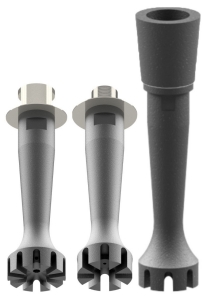
ROTON LDR — In-line Launder Degassing Rotors
Optimized for stability, efficiency and extended life
ROTON LDR rotors deliver consistent melt treatmenT with best‑in‑class wear resistance and high rotational stability.
Compatible with all in‑line launder systems and flow rates, LDR achieves over 3× longer service life, reduces oxide formation, and simplifies operation — meeting premium aluminium quality standards.
ROTON LDR Advantage
- Longer life and stable operation
- Cleaner melt with reduced dross adhesion
- Fewer changeovers, lower environmental impact
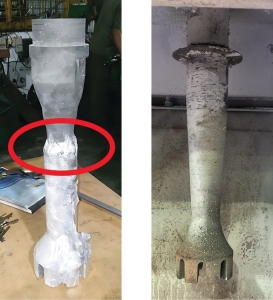
Left: Necking in graphite rotors after 7 days
Right: LDR Rotors after 35 days in service
ROTON BX — In-line Box Degassing Rotors
Built for maximum longevity
ROTON BX rotors combine advanced ceramics with superior erosion and oxidation resistance, delivering over 3× longer life than standard solutions.
Compatible with majority of in‑line box degassing systems, BX ensures repeatable performance, fewer interventions, and a lower total cost of ownership for high‑quality cables, foils, billets, and slabs.
ROTON BX Advantage
- Proven durability in demanding box applications
- One‑piece design for quick, reliable installation
- Reduced downtime and lower CO₂ emissions
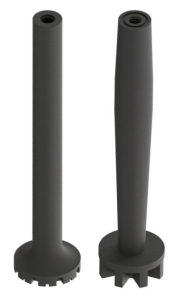
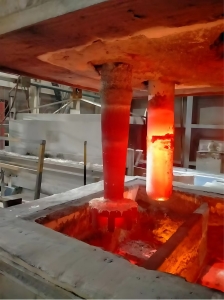
ROTONOX BX rotors
tested along with graphite rotors
Precast liners for Degassers and DBF Filters
Degassing and filtration are paramount to the quality of the aluminium and yield of the casting process. And refractory lining and parts used in those types of equipment define their performance and reliability to major extent.
At its production site in Graham (NC, US), ex-Permatech facility, Vesuvius has unique production capabilities to manufacture 1-piece pre-cast crack-free deep bed filter and degassing liners as large as 10 tons with dimensions accurate to 0.1 inch and pre-fired typically to 649°C (1200°F). In special cases, pre-firing up to 815°C (1500°F) is possible at customer request.
Precast liners allow for tailor-made, repeatable configurations, and longer service life compared to cast-in-situ solutions, due to controlled dry-out.


Ceramic Foam Filter (CFF) bowls
Ceramic Foam Filter (CFF) bowls, although less challenging in size, require meeting tight tolerances for the perfect fit of the consumable CFFs. Vesuvius mold design and manufacturing process ensure tolerances up to 0.05 inches.

DBF consumables
Vesuvius also supplies consumable refractory shapes for deep bed filters (grid bars, sink plates, baffles). Those can be either produced based on customer drawings, or designed for optimal fit of the deep bed filter box itself and safe handling (piece weight) from EHS perspective. These products are available in Beta 2 GB - similar material to that of DBF liners - from our facilities in Graham (NC, US) and Ras Al Khaimah (UAE), or made of Alugard 70 at our facility in Rio de Janeiro (Brazil).
For installation, assembly, maintenance and patching of DBFs, CFF bowls, and other cast house refractories, several types of Moldable (patching mastic) with excellent adhesion and non-wetting properties are available.
And to ensure the best performance and life-time of aluminium-exposed refractories, Boron Nitride coating should be applied regularly to the refractory surface.

Turn-key reline service
In North America, Vesuvius offers turn-key reline services for degassers, deep bed filters, as well as launder systems, including dismantling, relining, repairing and manufacturing of steel shells, etc. To learn more, check our Molten Metal Systems page.
Have a question? Contact us